Water power at the Riesenmühle
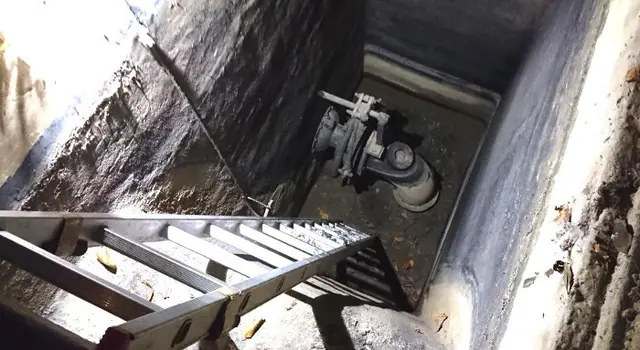
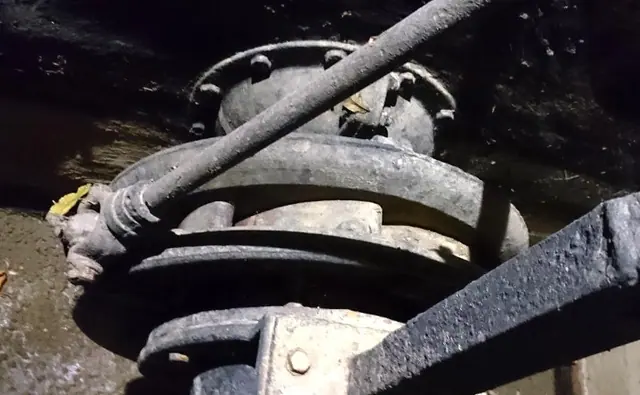
A large water wheel once turned here; today the water drives a turbine.
The stream and the mill race
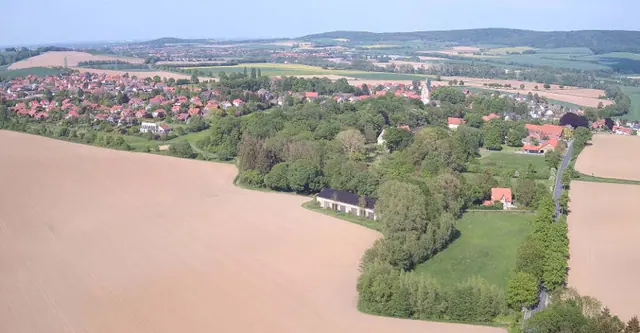
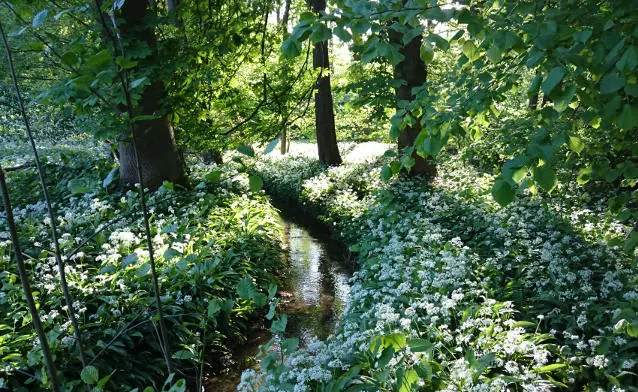
The Riesbach collects rain from about 23 square kilometres between the Deister, Süntel and Bückeberg hills and joins the Rodenberger Aue in Apelern. About 500 metres upstream, part of the water is diverted into the mill race. The race runs almost level while the stream falls, so at the mill the water stands five metres above the stream.
We installed a gauge in the mill race to record the flow over a long period, together with humidity, air pressure and temperature. The data are meant to help us improve the turbine. The system is currently offline and will be back soon. Meanwhile the measurements page shows archived data from the mill race and a map of the Riesbach catchment with current river levels across Germany.
The Francis turbine of 1947
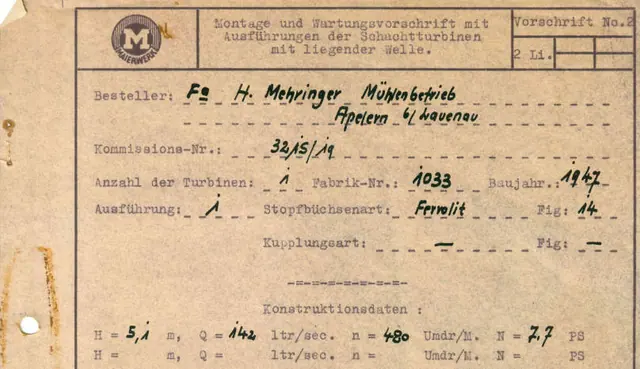
In 1947 the tenant bought a Francis turbine from Maierwerk in Bielefeld; it was installed in 1948. According to its data sheet it is designed for a head of 5.1 metres and 142 litres per second, producing 7.7 hp (about 5.6 kW). Today it drives a generator that makes electricity for the house.
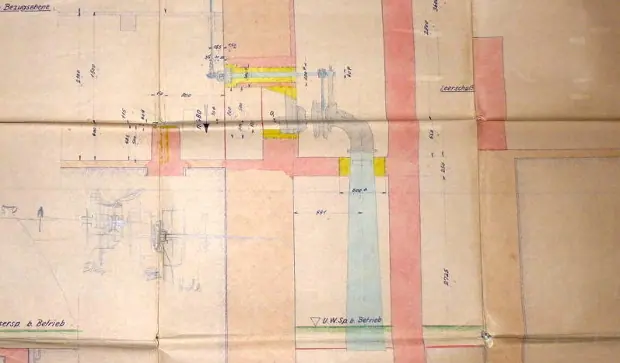
We only run it during the day, because it makes loud slapping noises. With only 30 to 40 litres per second available, it runs far below its design flow, and the strong suction behind the runner causes cavitation: vapour bubbles form and collapse with a bang. A spiralling vortex of vapour, known as a part-load vortex rope, can even be seen leaving the draft tube. Our first attempt to fix this is a dual control system that regulates speed with both the guide vanes and the generator load.